
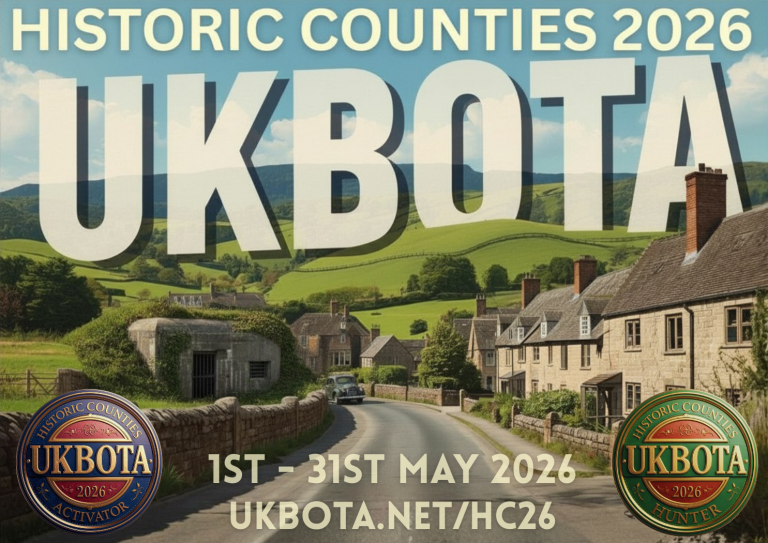
1st - 31st May 2026
History
1.1 The Historic Counties
The historic counties of the United Kingdom are ancient geographical divisions, many of which date back over a thousand years to the Anglo-Saxon period and even earlier traditional territories. Their names and boundaries became firmly established over centuries and were widely recognised long before modern administration existed. For generations, these counties formed the natural framework for identity, culture, and administration. They were used in everything from local governance and militia organisation to mapping, census records, and the recording of history. By the early 19th century, their borders were considered stable and universally understood.
1.2 What Changed?
The major shift came with the introduction of modern local government legislation, beginning with the Local Government Act of 1888. This created new “administrative counties” for practical governance purposes, followed by further reforms throughout the 20th century. Over time, these administrative areas evolved, merged, and in many cases bore little resemblance to the original counties. Mapping practices also changed, and the historic counties gradually disappeared from official maps and everyday use. However, crucially, these reforms did not abolish the historic counties themselves—they simply created a separate system for administration. The historic counties remain unchanged as cultural and geographical entities.
1.3 Why We Use Historic Counties
The Historic Counties Standard reaffirms that these counties still exist as a stable, unchanging geography, distinct from modern administrative boundaries. They continue to provide a meaningful framework for:
* Heritage and local identity
* Historical research and records
* Cultural and community events (like ours!)
* Tourism and education
Their enduring importance lies in continuity—linking present-day communities with their past.
1.4 Yorkshire and Its Ridings
This year, we are making one refinement to better reflect historic practice: Yorkshire will be recognised by its three ridings—East, West, and North—rather than as a single county. Historically, Yorkshire has always been divided into these ridings, each functioning as a distinct administrative and cultural area. The Standard itself recognises that, while not separate counties, the ridings can reasonably be treated as equivalent units for practical purposes. With the city of York being placed into the catchment of the North Riding.
1.5 The Channel Islands & Isle of Man
In addition to the historic counties the Yorkshire Ridings, again this year’s event will also include the Channel Islands to reflect their Crown Dependency, which are not part of the Historic Counties framework. The islands form Crown Dependencies—principally the Bailiwick of Jersey and the Bailiwick of Guernsey—and have never been incorporated into the county system of the United Kingdom. Instead, their origins lie in the Duchy of Normandy, and they retain their own legal systems, administrations, and distinct identities. As such, within our event they are recognised separately from the historic counties, reflecting their unique constitutional status while still celebrating their rich heritage and strong cultural ties to the British Isles. The Isle of Man sits in a similar position to the Channel Islands in that it is a, not part of the United Kingdom and not included within the historic counties’ framework. Historically, the island has its own identity and system of divisions known as sheadings, rather than counties. It has never been incorporated into the English or British county system, and instead developed separately with its own parliament, laws, and administrative structure. For the purposes of your event, it can be treated in the same way as the Channel Islands—a separate territory outside the historic counties.
1.6 Keeping History Alive
By using the historic counties, we celebrate a geography that has remained consistent for centuries—far longer than any modern administrative system. Our event is not just about locations on a map, but about preserving and recognising the deep-rooted identities that define the United Kingdom’s rich heritage.
1.7 Event Coverage This Year
This year’s event will span 96 territories across the British Isles. This total is made up of 91 historic counties, with Yorkshire represented by its three traditional ridings—East, West and North—rather than as a single county, alongside the inclusion of the Channel Islands. As Crown Dependencies, the Channel Islands are not part of the historic county framework, but are recognised separately within the event to reflect their unique constitutional status and heritage along with the Isle of Man.
UKBOTA List with Historic Counties
| Scheme | DXCC | Reference | Name | Type | Lat | Long | Locator |
|---|
Format - Rules Overview
2.1 Scoring System
Again, this year’s event will use a multiplier-based scoring system, designed to reward both activity and geographic spread across the historic counties and territories. For every activation or hunt completed, your score is calculated by multiplying the total number of bunkers activated or worked by the number of unique counties or territories activated or worked.
2.2 How it works
- Each bunker activation or hunt counts as 1 point.
- Your total is then multiplied by the number of different historic counties or territories you have activated or worked
2.2.1 Example 1 Activator:
An operator activates 2 bunkers in one day:
- One in Bedfordshire
- One in Northamptonshire
They have activated 2 bunkers across 2 counties:
2 (Bunkers) × 2 (Counties / Territories) = 4 points
2.2.2 Example 2 Activator:
Over the full event, an operator activates:
- 25 bunkers
- Across 17 (Counties / Territories) unique counties/territories
25 (Bunkers) × 17 = 425 points
2.2.3 Example 3 Hunter / SWL:
An operator Works / Hears 7 bunkers in one day:
- Three in Bedfordshire
- Three in Northamptonshire
- One in Cornwall
They have Worked / Heard 7 bunkers across 3 counties:
7 (Bunkers) × 3 (Counties / Territories) = 21 points
2.2.4 Example 4 Hunter / SWL:
Over the full event, an operator Hunts / Hears:
- 104 bunkers
- Across 17 unique counties/territories
104 (Bunkers) × 17 (Counties / Territories) = 1768 points
This system encourages participants to explore and activate across as many different historic counties and territories as possible.
2.3 Defining the Historic County
For the purposes of this event, the historic county (or territory) of an activation is determined by the official bunker location (Historic County) as listed on the UKBOTA master list—not by the operator’s physical operating position.
This is important because, in some cases, an activator may operate from just outside the county / territory boundary.
2.3.1 Example:
A bunker is officially listed in the Historic County of Rutland on the UKBOTA Master Reference list, but the activator sets up their station in a neighbouring county such as Leicestershire, Lincolnshire, or Northamptonshire as defined by the Historic Counties boundaries.
For scoring purposes, this activation will always count as Rutland, because the bunker itself lies within that historic county.
Rules in detail - Activator
3.1 Activator Rules
1. Minimum QSO Requirement (HF / VHF Mixed). Activations using HF, or a mix of HF and VHF, must achieve a minimum of 25 QSOs to be considered valid. If this total is not reached during the initial activation, the activator may return to the site at any time during the event to complete the required contacts.
Definition of Counties and Territories
- Counties and territories are defined using the UKBOTA Master List, based on the recognised Historic Counties.
- County Attribution
The county or territory credited for an activation is determined by the historic county location of the bunker, as listed in the UKBOTA Master List.
The activator’s physical operating position does not determine the county.
- Event Geography
The event uses the Historic Counties framework as defined by the Historic Counties Standard, with the following additions:
- The Channel Islands are included as Crown Dependencies
- Yorkshire is divided into its three historic ridings (East, West, and North)
- Claiming a County or Territory
Each county or territory may only be claimed once per activator during the event.
A county is considered claimed once a valid activation (meeting QSO requirements) has been completed and it has not previously been claimed by that activator.
- Revisiting Counties
Activators may return to any county or territory to activate additional bunkers.- Additional bunker activations will score as normal
- However, the county multiplier will only be applied once for each unique county or territory
3.2 Example 1 Activator:
An operator activates 2 bunkers in one day:
- One in Bedfordshire
- One in Northamptonshire
They have activated 2 bunkers across 2 counties:
2 (Bunkers) × 2 (Counties / Territories) = 4 points
3.3 Example 2 Activator:
Over the full event, an operator activates:
- 25 bunkers
- Across 17 (Counties / Territories) unique counties/territories
25 (Bunkers) × 17 = 425 points
3.4 Tiers Levels (points):
Bronze = 20
Silver = 60
Gold = 120
Platinum = 200
Master I = 300
Master II = 450
Rules in detail - Hunter
4.1 Hunter / SWL Rules
- Minimum QSO Requirement. Is the 2-way exchange of RST between Both the hunter and the activator.
- Definition of Counties and Territories. Counties and territories are defined using the UKBOTA Master List, based on the recognised Historic Counties with the addition of the Yorkshire Ridings & Channel Islands.
- County Attribution. The county or territory credited for an activation is determined by the historic county location of the bunker, as listed in the UKBOTA Master List.
- Event Geography. The event uses the Historic Counties framework as defined by the Historic Counties Standard, with the following additions:
- The Channel Islands are included as Crown Dependencies
Yorkshire is divided into its three historic ridings (East, West, and North)
5. Claiming a County or Territory. Each county or territory may only be claimed once per hunt during the event. A county is considered claimed once a valid activation (meeting QSO requirements) has been completed and it has not previously been claimed by the hunter / SWL.
4.2 Example 1 Hunter / SWL:
An operator Works / Hears 7 bunkers in one day:
- Three in Bedfordshire
- Three in Northamptonshire
- One in Cornwall
They have Worked / Heard 7 bunkers across 3 counties:
7 (Bunkers) × 3 (Counties / Territories) = 21 points
4.3 Example 2 Hunter / SWL:
Over the full event, an operator Hunts / Hears:
- 104 bunkers
- Across 17 unique counties/territories
104 (Bunkers) × 17 (Counties / Territories) = 1768 points
Tiers Levels:
Bronze = 250
Silver = 1000
Gold = 4000
Platinum = 10,000
Master I = 20,000
Master II = 30,000
(C) UKBOTA 2026